COD 2,903 mg/L, turbidity 1,371 NTU.
Wastewater treatment worksDownload case study PDF
Municipal wastewater works, Highveld — treating a non-functional WWTW
There was no functioning at this works at all: not one mechanical item was in operation, there was no disinfection stage and no working solids return, so the plant passed waste in and waste out. Nutrient removal and full bacterial compliance were never physically achievable in that condition. Nitrification was not achievable either — with both clarifiers out of service, solids retention time was a fraction of what nitrifying bacteria require. That limitation is reported openly. What biological treatment could do, and did, was reduce the organic load and the sludge inventory.
LocationHighveld region, South Africa
Products usedBaczyme Sewage Powder+Baczyme Sewage Liquid+
Project overview
Site challenge and treatment summary.
There was no functioning at this works at all: not one mechanical item was in operation, there was no disinfection stage and no working solids return, so the plant passed waste in and waste out. Nutrient removal and full bacterial compliance were never physically achievable in that condition. Nitrification was not achievable either — with both clarifiers out of service, solids retention time was a fraction of what nitrifying bacteria require. That limitation is reported openly. What biological treatment could do, and did, was reduce the organic load and the sludge inventory.
- Initial problem
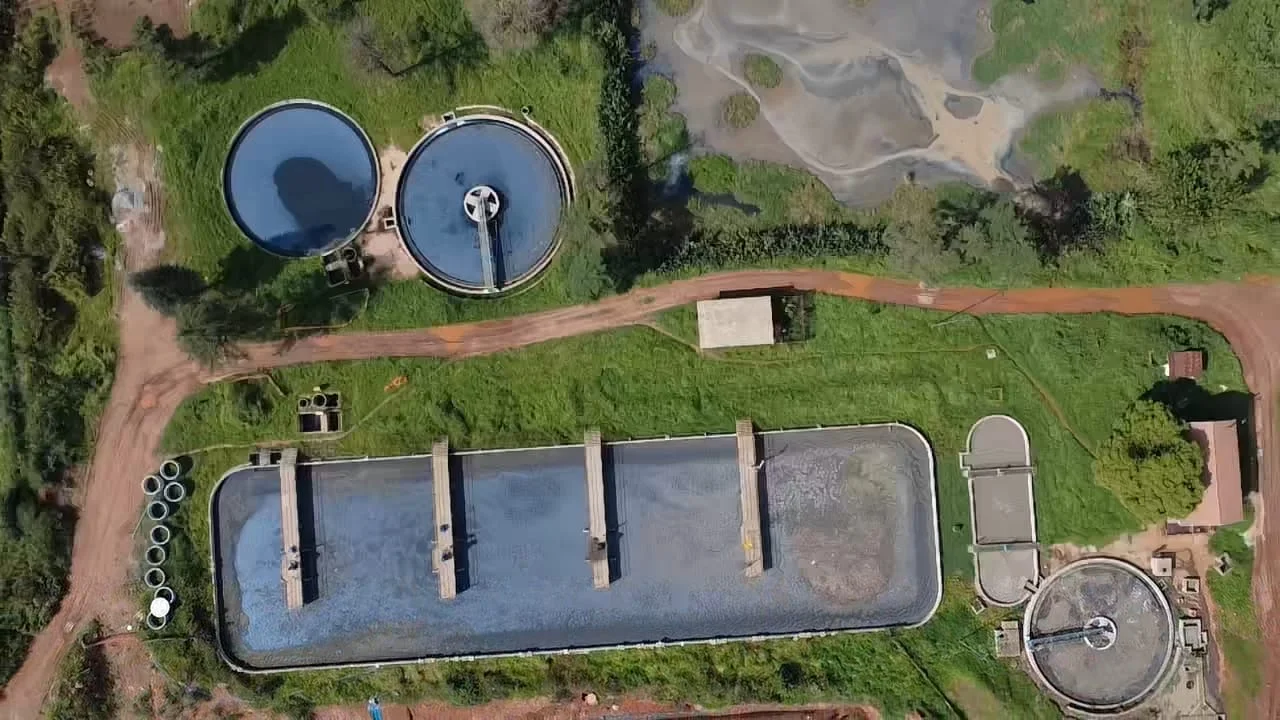
- A 7 ML/day municipal treatment works where not one mechanical item was functioning — waste in, waste out. Both clarifiers were out of service, the main treatment tank was filled with solid sludge that had to be opened with an excavator, and downstream ponds carried four years of accumulated material.
- Baczyme product used
- Baczyme Sewage Powder & Baczyme Sewage Liquid+
- Dosage
- For the first 6 months, 2 kg of Baczyme Sewage Powder was dosed per megalitre. Treatment then moved to 1 litre of Baczyme Sewage Liquid+ per megalitre on an ongoing basis. Biological treatment was applied to reduce organic load and sludge inventory inside a plant with no mechanical function of its own.
- Treatment period
- Not specified in source brief
Site conditions
What Baczyme was responding to.
- Not one mechanical item at the works was functioning — the plant was effectively waste in, waste out.
- Both clarifiers were out of service.
- There was no disinfection stage and no working solids return.
- The main treatment tank was filled with solid sludge requiring excavator access.
- Downstream ponds carried four years of accumulated material.
- Plant flow was approximately 7 ML/day.
Treatment objectives
What the programme aimed to support.
- Reduce organic load (COD) with no functioning plant infrastructure to work with
- Reduce turbidity
- Reduce the sludge inventory in the main treatment tank
Before and after
Reported project progression.
These notes summarise the before-and-after information available for this specific Baczyme project.
COD 181 mg/L (93.8% reduction), turbidity 60 NTU (95.6% reduction).
Reported outcomes
COD was reduced from 2,903 mg/L to 181 mg/L (93.8% reduction). Turbidity was reduced from 1,371 NTU to 60 NTU (95.6% reduction). This was achieved out of a tank that was effectively solid at the start of the programme.
This works must remain anonymous — described only as "a Highveld municipal wastewater treatment works," with no name, signage, gate boards, vehicle livery or recognisable landmarks in any photography. The same anonymity applies to a second works discharging downstream of it, which is not part of this case study. Do not publish ammonia figures, E. coli figures, or any claim about the downstream river.
Test results or documents
COD and turbidity figures only. Do not publish any ammonia figure, any E. coli figure, or any claim about the river downstream of this works — these are not cleared.
Project significance
Why this project matters.
Publishing this plant's condition alongside its results is what makes them credible to a technical reader: biological treatment achieved a real reduction in organic load and sludge inventory at a works where no mechanical equipment was functioning and which was not physically capable of full nutrient or bacterial compliance.
Related products
Baczyme Sewage Powder
Baczyme Sewage Liquid+
Operating an overloaded municipal works?
Discuss plant condition, flow and current process limitations with Baczyme.
Discuss a similar project